Dead Languages
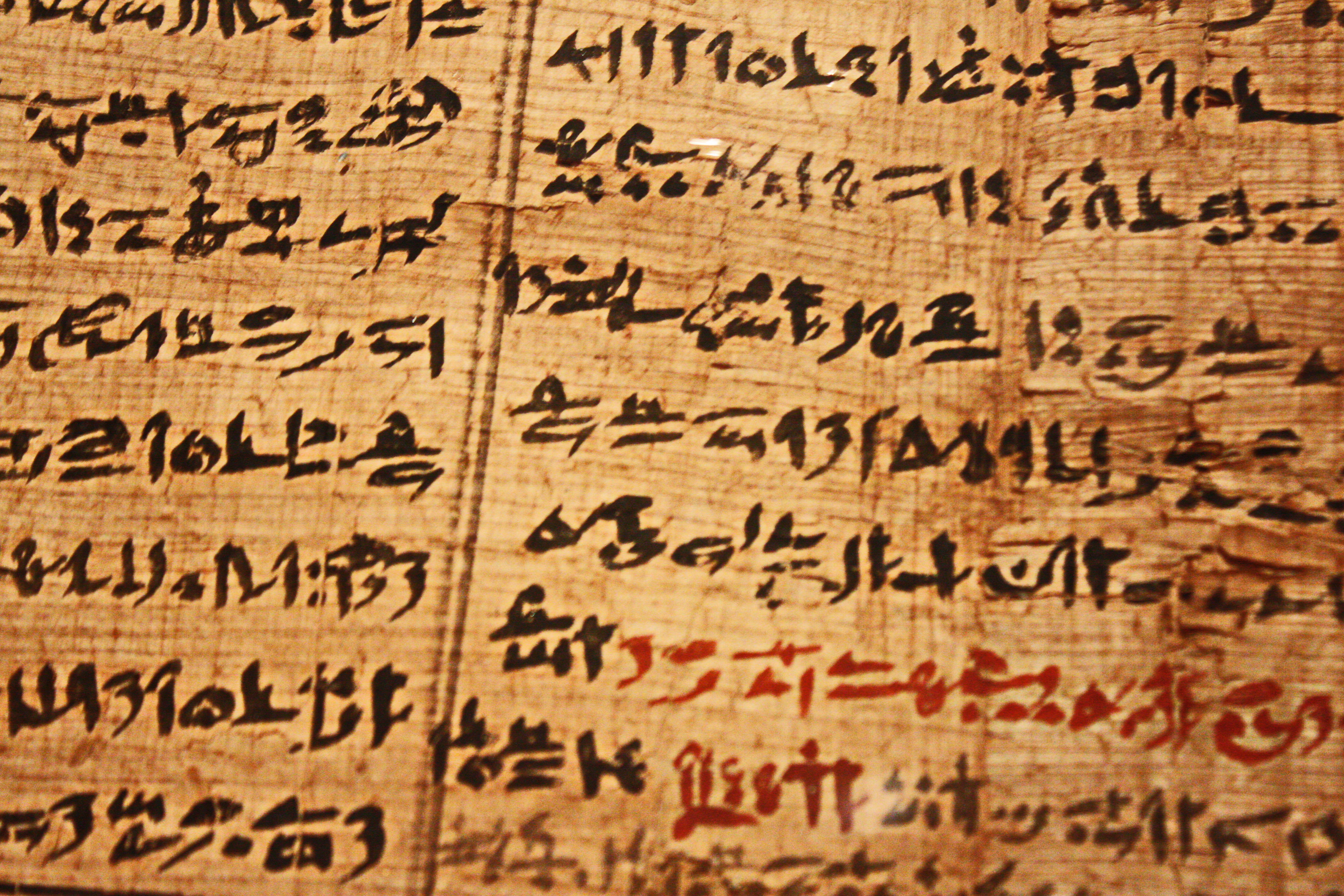
You can still see the brush strokes on the ancient papyrus,
the colors, black and red stand sharp and bold,
a proclamation, perhaps to the underworld
of pharaoh’s entry to the afterlife, or perhaps
something far more prosaic, an inventory
of dead things in jars for grave robbers and treasure hunters,
a simple list of the parts and pieces, with no key
as to how it all goes together four thousand years later.
That is the problem with dead languages, with words not spoken.
The words become lost. They become museum pieces,
their meaning lost, a display, something pretty as art,
something to hang on the walls, but no more than history,
all the passion and hope and love lost in it’s silence,
and you wonder at what might have been
if we still spoke Egyptian, or in fact,
if we still spoke at all.
About this poem
I went to the Albany Institute of Art and History yesterday. And, as I have been since a boy, I was drawn to the papyrus writings. Such mystery in a lost language. It always haunts me.
And it reminds me of things lost when they are not said. Love. Promise. Hopes. The best of things can and too often do, die in a dead language.
Tom
 Quarry House
That last stanza is a zinger…
Important poem.