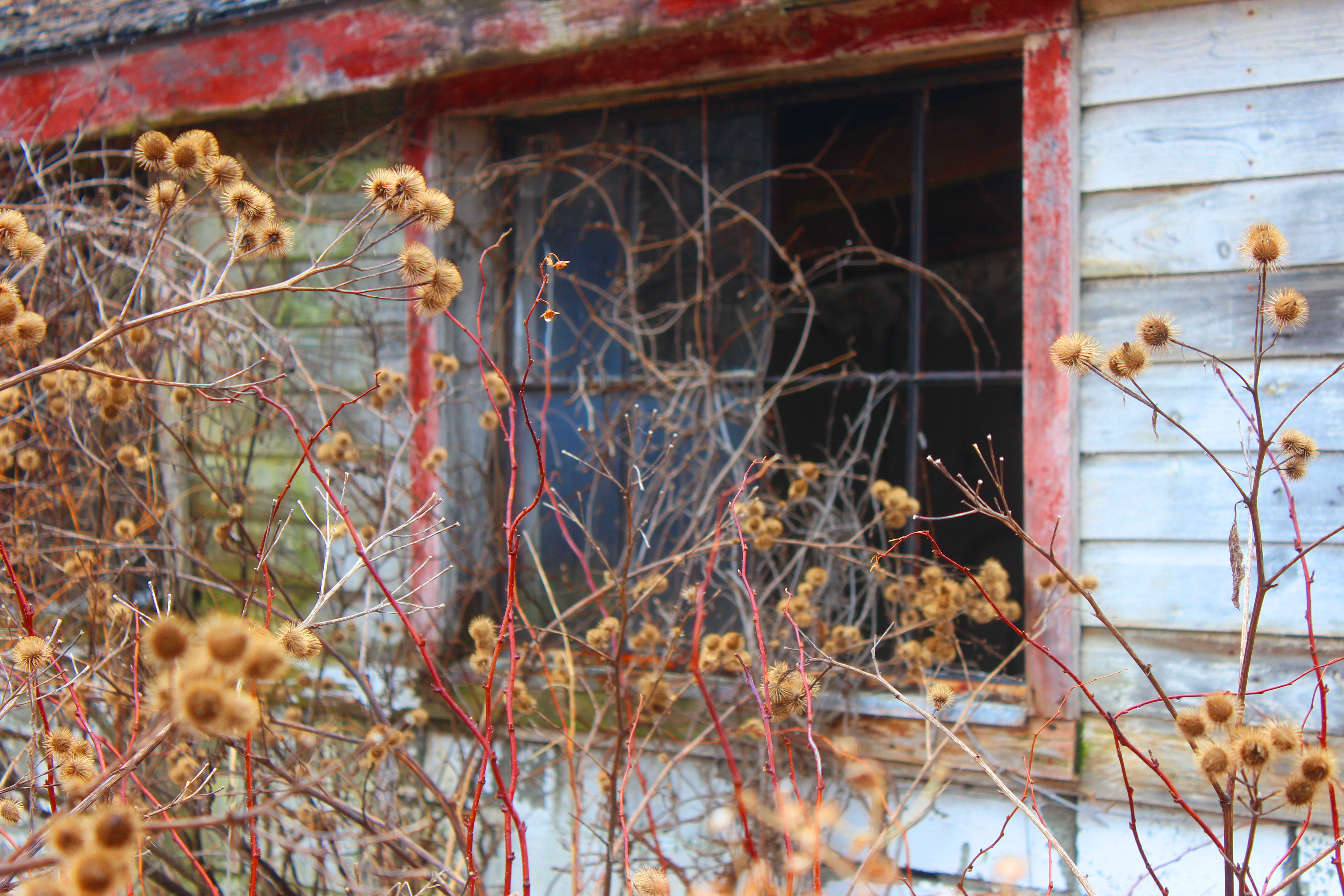
A Child in the Wilderness
Someone lived here once.
You can still see the paint,
once bright and red on the windows.
You can see the hardware
that once held the front door in place.
Among the brambles, a line of roses bloom.
Walk behind the house and you can see
the valley and beyond it, the mountains.
You can see why this place was loved,
but not why this is all that still stands.
The barn to the side has collapsed,
all rubble and ruin,
A pile of painless boards all akimbo, waiting
for a match to become a signal fire
in the night.
A silo. too. Rusted rungs going up one side
to where the roof has collapsed.
It’s a bad habit you have, climbing
just to see. No matter
there is nothing there
but darkness and dust.
But, as you walk, careful to avoid the thorns,
you do see it. What once was. You can see
why this old house would have been
a perfect home. A place of peace and prosperity.
A place to rest in the crux of the valley.
You can see the charm. You can feel it.
What you not see is the why. Why this farm,
once so perfect, was no longer worth the work
of staying. Why they, whoever they were, walked away.
The wind rustles the thorns. There is a life to lead
and part of you wants to go, and another part,
the one so often abandoned yourself,
wants to stay.
About this poem.
Abandonment runs deep in my emotional basket case. Not that I have had so much more than others, but that I seem to feel it more than most. Part of my depression, perhaps. Or a skewed set of feelings, perhaps. Maybe that is why I have this weakness for abandoned places. A shared history buried in old beams and an old heart.
The photograph was taken just over the New York border from where I live. The poem is about that place too.
Poetry is never about one thing.
Tom

